
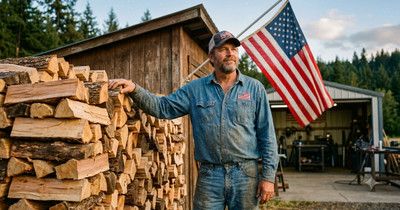
Built in America, Built With Pride: What the 4th of July Means to Us
SideTool on 4th Jul 2026
Two hundred and fifty years ago today, a handful of colonies decided they'd rather build something themselves than keep depending on someone else to do it for them. That idea didn't stay in 1776 — it's the same idea sitting in every plate of steel we cut in Washington state.
We're not going to pretend a mechanical wood splitter attachment carries the same weight as the Declaration of Independence. But the instinct behind both is the same: do the hard thing yourself, do it right, and stand behind it — no shortcuts, no outsourcing the part that matters.
Where SideTool Comes From
SideTool is built in Washington state, not assembled from a container of overseas parts and stamped with a flag sticker at the end. That distinction matters more than it sounds. When you build domestically, you don't get to hide behind a supply chain you don't control. You're the one who picks the steel. You're the one who answers for the weld. You're the one who has to explain it to the guy who bought it if something goes wrong.
So we use American-made materials — American steel, American fasteners, American components — because it's the only way we can actually stand behind what we sell instead of just hoping it holds up.
Why "Made in the USA" Is a Spec, Not a Slogan
It's easy to slap "Made in America" on a label. It's harder to build a product where that phrase is actually load-bearing. For us, it shows up in decisions most customers never see:
- Domestic steel — with certified mill specs, not whatever grade happened to be cheapest on the world market that quarter.
- A simple, mechanical design — no hydraulics, no hoses, no seals to blow — because the fewer things that can fail on a jobsite, the more time you spend working and less time wrenching.
- American manufacturing standards — not someone else's spec, not a race to the lowest bid.
- A supply chain we can actually call — so when something needs to change, it changes in days, not across an ocean.
None of that is patriotic marketing. It's just what it takes to build attachments that survive a mini excavator's actual working life instead of one good season.
Why This Matters Right Now
Here's the part that's easy to miss in the middle of a holiday weekend: summer is prep season, whether you're thinking about it yet or not. The wood you split in July is the wood that's actually dry by the time it's cold enough to matter. The equipment you buy now is the equipment that's on your machine before the ground gets hard and the days get short — not the equipment you're waiting on backorder for in November.
Buying domestic isn't just a values statement. It's a practical one. American-made means American lead times. It means when you order a wood splitter, it's not waiting on a boat.
Built for the Owner-Operator
We didn't pick "rugged durability, proven performance" because it sounded good on a landing page. It's the standard the product gets held to before it ever ships — because the guy running his own mini excavator, on his own land or his own jobsite, doesn't have a fleet mechanic or a service contract to bail him out. He's the operator, the maintenance crew, and the guy who eats the cost if a part quits mid-job. That's who we build for, and it's exactly why the design stays mechanical and simple instead of complicated and fragile.
Owner-operators are some of the most proud, self-reliant people in this country — the ones who'd rather buy one thing built right than replace three things built cheap. That's the same instinct this country was founded on, and it's the standard we hold ourselves to in Washington state.
That's what today is about.
Happy 4th of July — from our shop to yours.